The High Cost of a Low Price: Why You Should Never Buy a “Clone” RCD330
The RCD330 (also known as R340G) is legendary among Volkswagen, Skoda, and SEAT owners. Its seamless compatibility with vehicles from 2004–2018 and native support for CarPlay and Android Auto make it the ultimate upgrade.
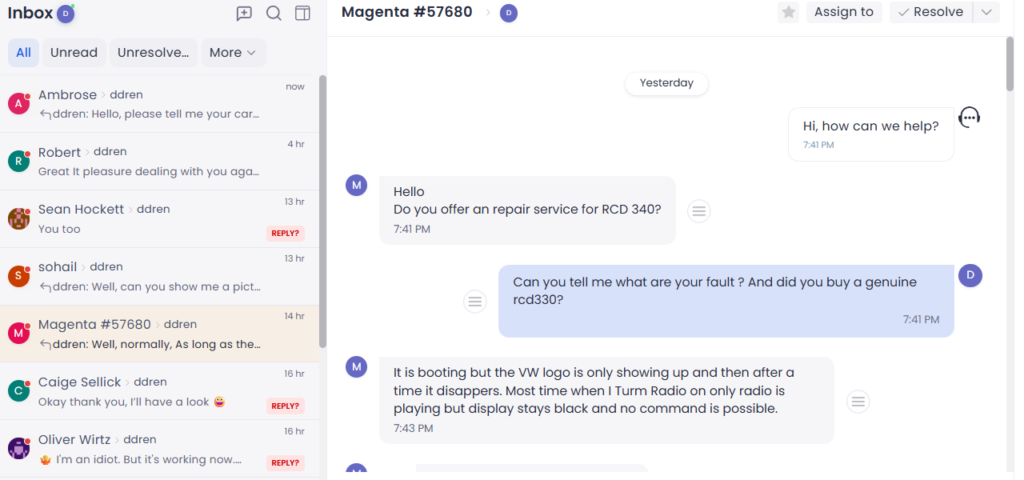
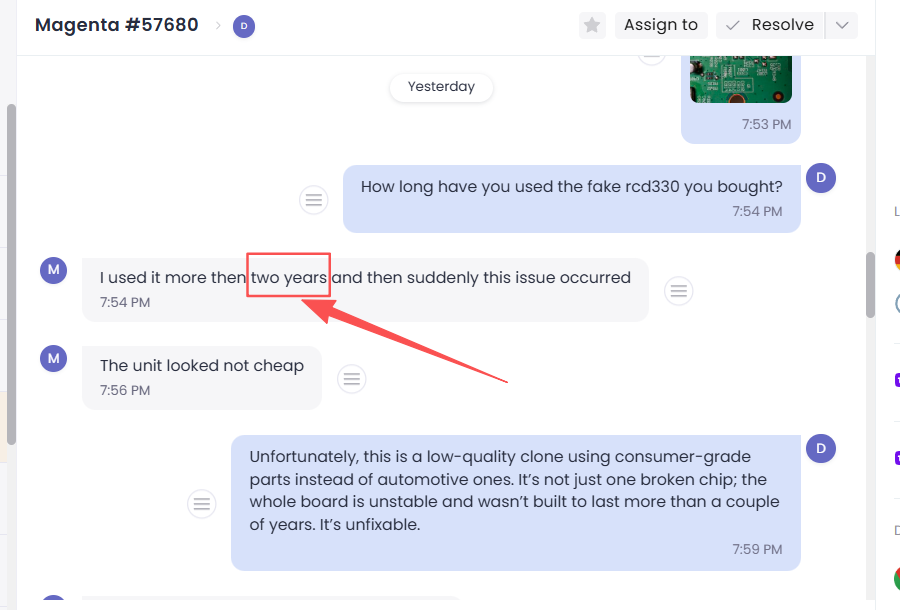
However, its popularity has given rise to a dangerous market of clones, fakes, and “exact replicas.” While a genuine unit costs $360, clones are often sold for $300–$350. Saving $10 to $60 might seem like a bargain, but beneath the surface, it is a high-stakes gamble with your car’s electronics.
1. The Component Crisis: Consumer-Grade vs. Automotive-Grade
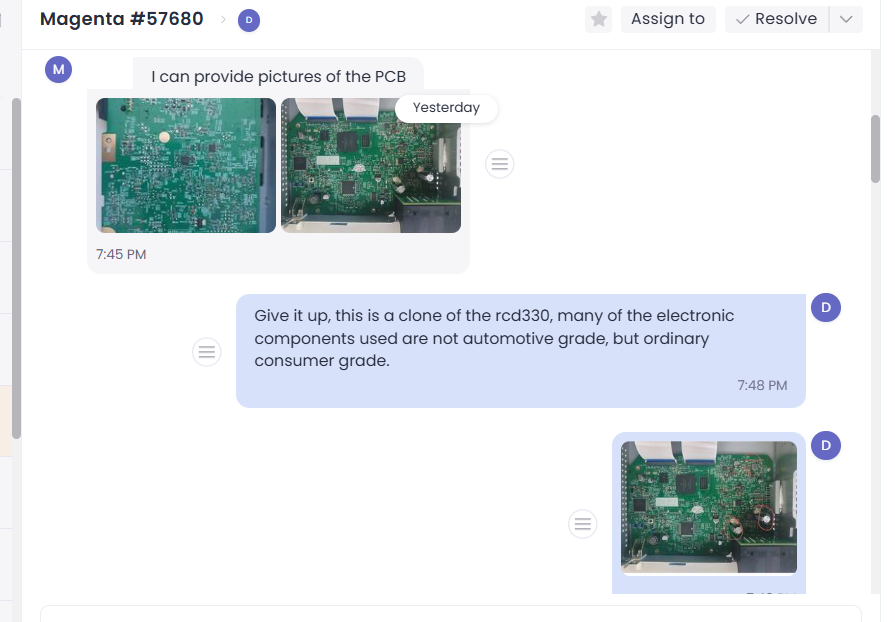
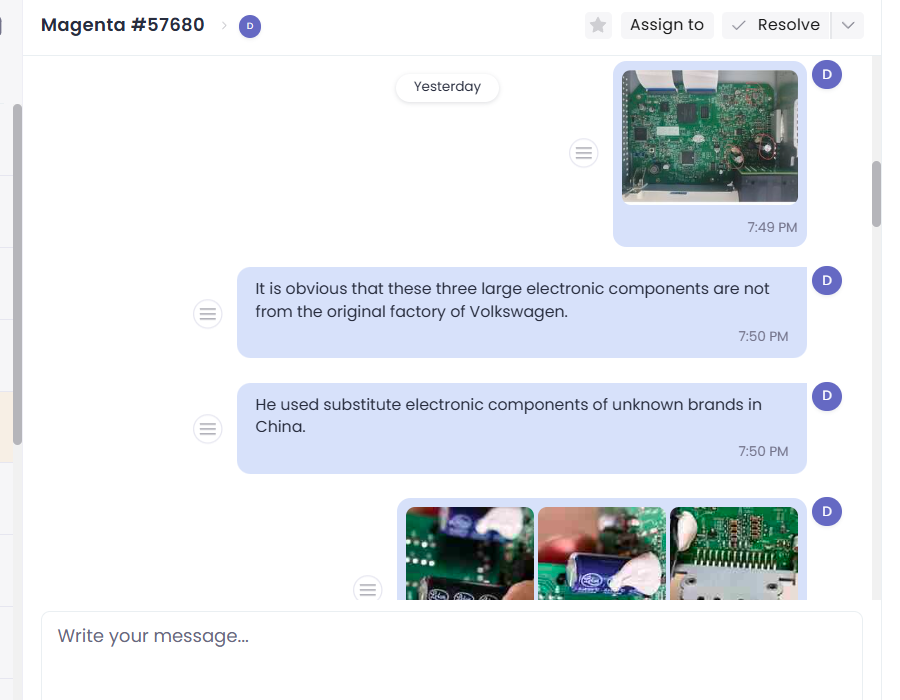
The most significant difference lies in what you cannot see: the internal components.
-
Genuine RCD330: Built to rigorous German automotive standards. It uses specialized components from top-tier brands like Murata, TDK, and OSRAM. These parts are “Automotive-Grade,” designed to operate flawlessly in extreme temperatures (-40°C to 85°C) and survive constant vehicle vibrations.
-
Clone RCD330: To cut costs, small third-party factories use Consumer-Grade resistors and capacitors. These are meant for home electronics, not cars. In the heat of summer or the vibration of a highway drive, these cheap components fail, leading to overheating, sudden reboots, or even motherboard explosions (as reported on platforms like Reddit).
2. The “Frankenstein” Hardware: Recycled & Resoldered Chips
Small factories cannot purchase specialized chips directly from Volkswagen’s suppliers (like ALPS or Panasonic). Instead, they perform a risky “harvesting” process:
-
The Bluetooth Chip: Clones often use Bluetooth chips desoldered from old, scrapped VW units. These chips undergo at least two rounds of high-temperature soldering (above 380°C). This thermal stress compromises the chip’s lifespan, making Bluetooth connection drops inevitable.
-
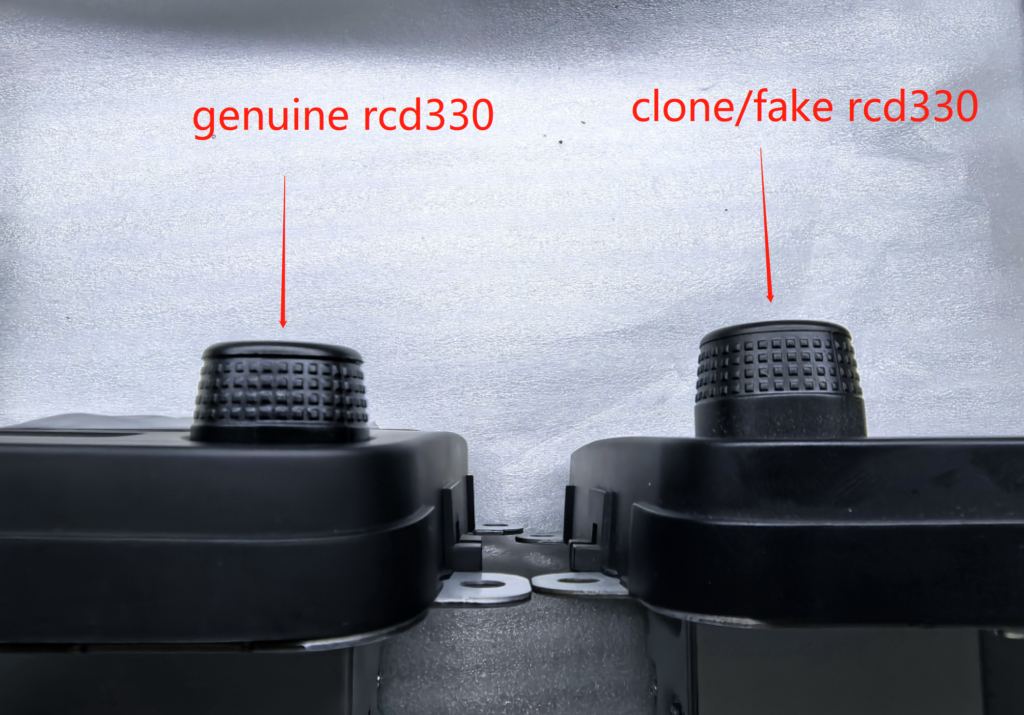
The Knobs & Decoders: Genuine units use Panasonic decoders. Clones substitute these with unknown, off-brand parts. This is why the knobs on a fake unit often protrude further from the panel and feel “clicky” or loose.
-
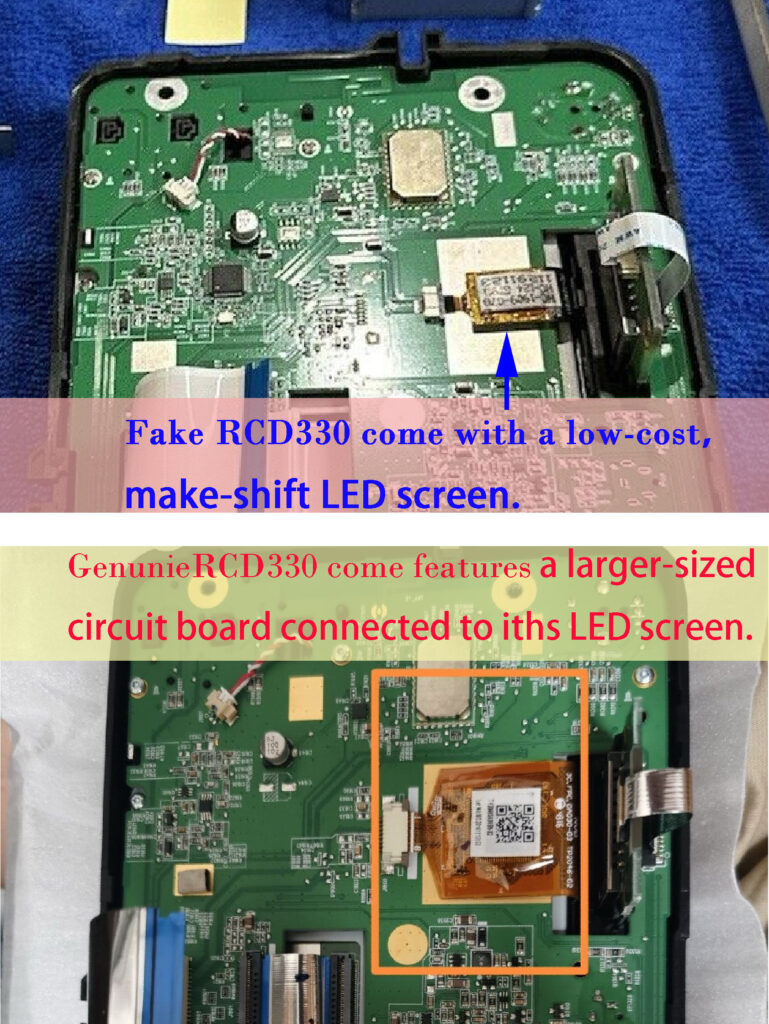
The Screen & Backlight: While genuine units use OSRAM LED beads for a uniform, soft red glow, clones use cheap LEDs that can be uneven or too bright, and touch screens that lack the original factory’s responsiveness.
3. How to Spot a Fake: 3 Simple Visual Checks
If you are unsure if your unit is genuine, check these three physical markers:
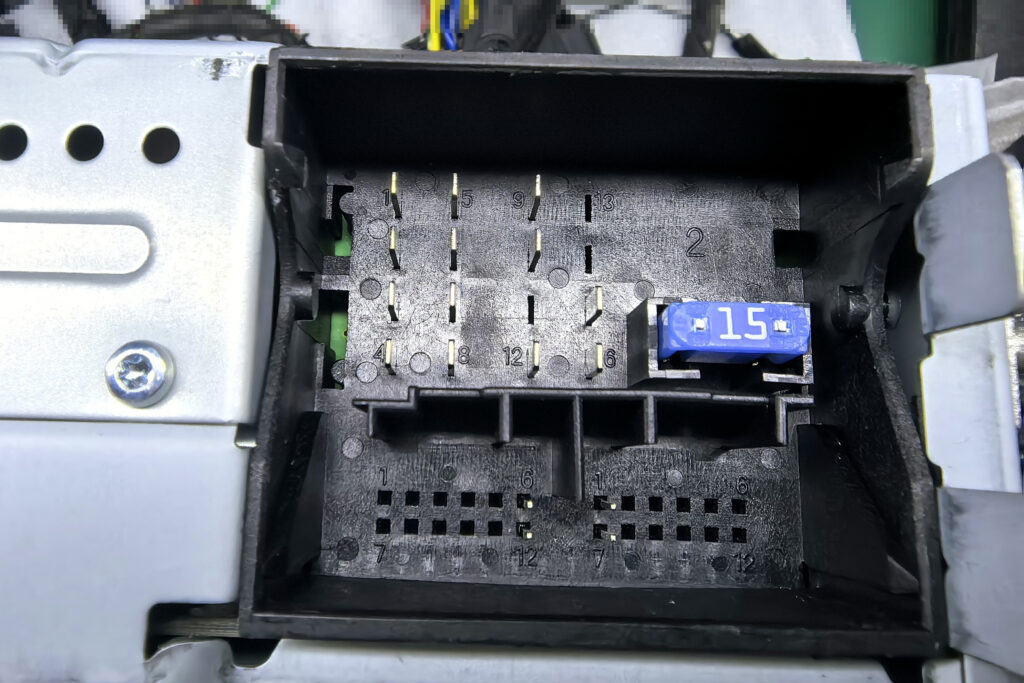
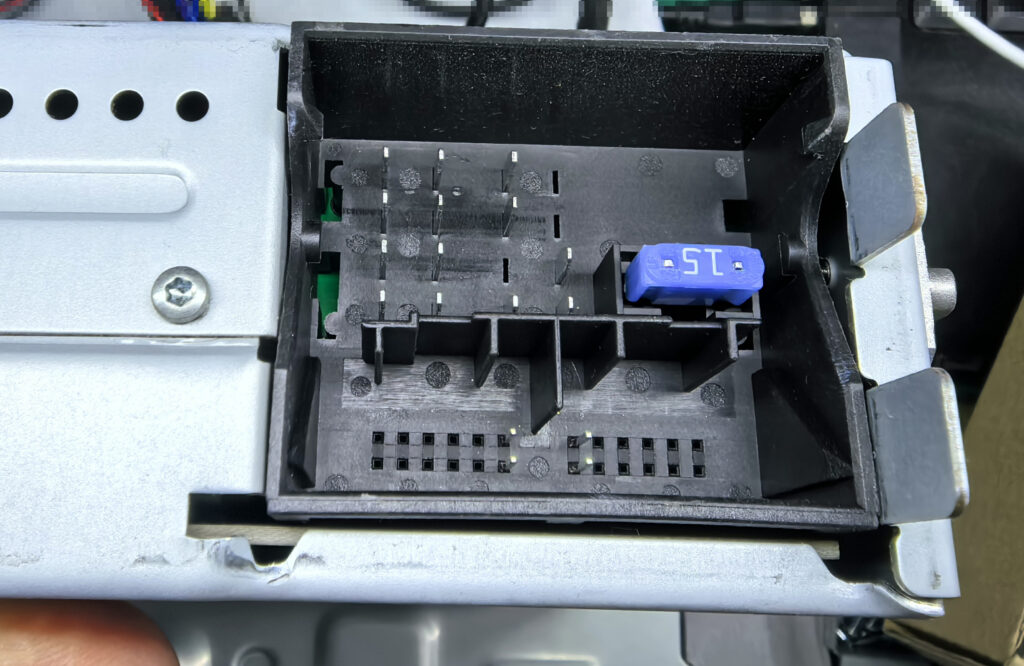
A. The Power Port Serial Numbers
German automotive standards (Mercedes, BMW, Audi, VW) require every pin in the power interface to have a molded serial number.
-
Genuine: Numbers are clearly visible next to the pins.
-
Clone: The plastic is smooth and lacks these numbers.
B. Screws: Hexagon vs. Phillips
Volkswagen never uses Phillips (cross) screws for its head units.
-
Genuine: Uses inner hexagon screws (T-shaped) for the guide blocks and internal LCD fixing.
-
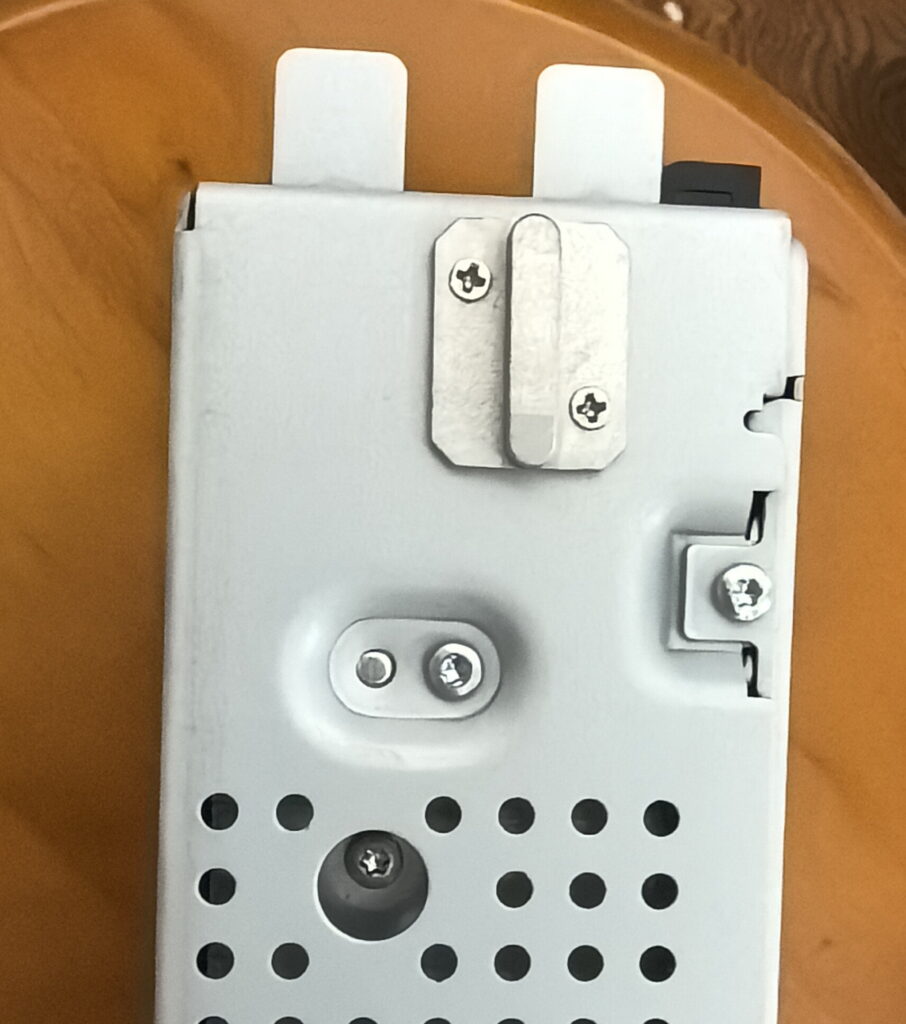
Clone: Uses cheap Phillips screws. If you see a cross-head screw on the back or side of the unit, it is 100% a fake.
C. The Knob Height
Because the internal decoders are not original, the knobs on fake units usually sit noticeably taller and feel less premium to the touch.
4. The Hidden “Refit” Market (RCD360, RCD410, etc.)
Be wary of units marketed as RCD360, RCD360 PRO, RCD410, RCD440,or RCD880. Disclaimer: These are not 100% Volkswagen original units. They are “hybrid” products:
-
They are often modified from Chinese MQB-platform units (like part number 19D 035 280).
-
About 50% of the hardware is third-party. While they may function similarly, they do not offer the same shielding, heat dissipation, or long-term stability as a true RCD330/R340G.
5. The Verdict: Buy Once, Buy Right
A “Clone” RCD330 is an exact replica in appearance only. It is a product of uncontrolled production standards and unknown origins.
Why risk your car’s electrical system to save $30?
-
Genuine ($360): Peace of mind, superior audio DAC, automotive-grade durability, and high resale value.
-
Clone ($300-$350): Unstable software, poor audio quality, high failure risk, and zero safety assurance.
Our Guarantee: We only sell 100% Genuine Noname/Viston units. We even offer a Free Authentication Service—post a photo of your unit’s motherboard or ports in the comments below, and our technicians will verify it for you.
Don’t settle for a copy. Invest in the original.
Certain German automotive brands, including Mercedes-Benz, BMW, Audi, and Volkswagen, adhere to rigorous production processes and standards. They maintain a unified specification and standard for the power port of OEM units, with each pin in the interface assigned a serial number. Please refer to the image below; the cloned RCD330 lacks these numbers.
You can also take a closer look at the power port of the old OEM device. Whether it is RCD310, RCD510, RNS315, RNS510, or MIB equipment in recent years, these numbers are all present.
The power port of the genuine RCD330 or R340G (with numbers)
The power port of Cloned/Fake RCD330 or R340G (lacks these numbers)
All Volkswagen OEM units, including the Noname and Viston RCD330/R340G models that comply with German standards, utilize inner hexagon screws, which are removed using T-shaped screwdrivers. Phillips screws are never utilized in these units. In contrast, the cloned/fake RCD330 models employ Phillips screws for the guide block fixing screws. (It’s worth noting that in earlier cloned RCD330 models, the guide block was even omitted to further reduce costs.) Upon dismantling a cloned RCD330 LCD screen, you will still discover four Phillips screws, which have never been used in Volkswagen units manufactured in Germany.
The genuine Noname and Viston RCD330/R340G units feature a guide block and inner hexagon screws.
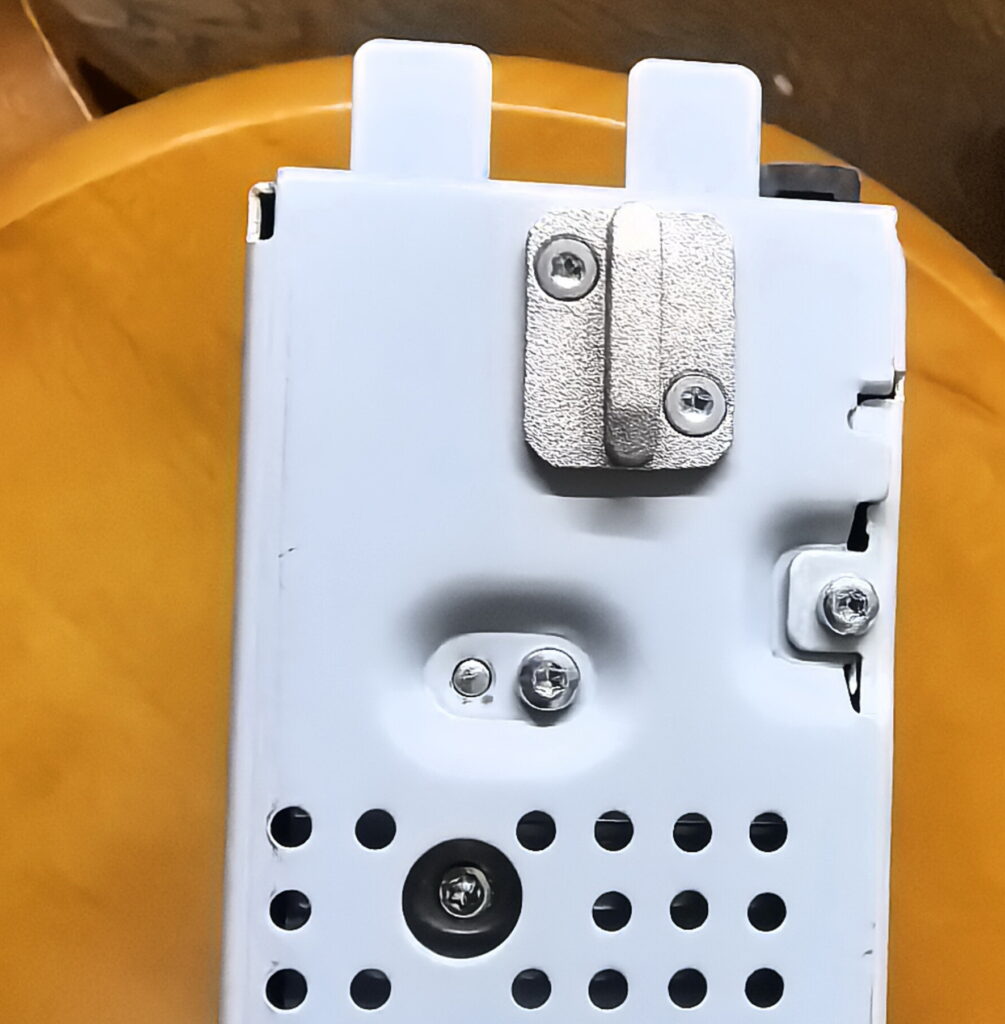
The cloned/fake versions of the Noname and Viston RCD330/R340G units use Phillips screws.
From its appearance, the knob of the cloned/fake RCD330 is taller, which can be clearly distinguished.
The image below, on its right side, shows a fake RCD330.
We will gradually provide some pictures and videos to expose those cloned/ fake RCD330.
A cloned RCD330 unit experienced a component explosion failure, as discussed in this Reddit post.
How to know if it is a genuine RCD330 (2).
byu/RespondCold5292 inRCD_330
How to know if it is a genuine RCD330 (3).
byu/RespondCold5292 inRCD_330
How to know if it is a genuine RCD330. Episode 4
byu/RespondCold5292 inRCD_330
Waiting for updates.

Leave a Reply